



A social media algorithm is the ranking system a platform uses to decide which posts each person sees. Platforms predict what you are likely to watch, like, share or save, and rank content by those predictions. For businesses, the practical lesson is consistent: make content people finish, save, share and reply to, keep your account focused, and measure results. This guide explains how ranking works, what Instagram and TikTok say about their own systems, and how to turn that into a content plan.
Key Takeaways
- Feeds are ranked by predicted interest, not just posted in time order.
- Instagram says Explore ranks content using information about the post (how many people like, comment, share and save it, and how quickly), your activity, your history with the account, and information about the account. Likes, saves and shares are the actions it predicts most for Explore.
- TikTok says its For You feed uses user interactions, content information and user information, and its public explanation does not mention follower count.
- Instagram announced a five-hashtag limit for captions in December 2025, and says fewer, more targeted hashtags can help.
- Platforms change often, so test and measure instead of chasing rumors.
What Is a Social Media Algorithm?
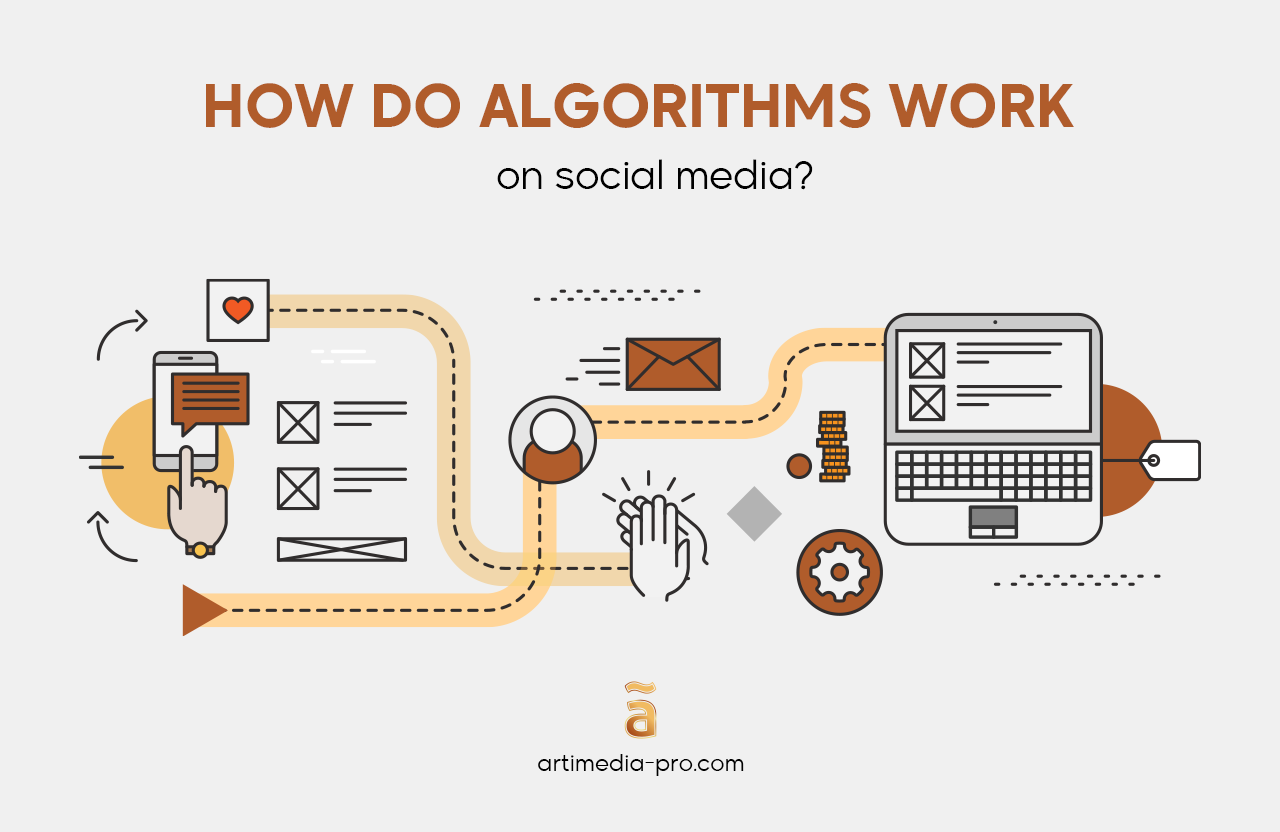
A social media algorithm is a set of rules and machine learning models that sort the content competing for each person’s attention. The platform’s goal is to show people things they find worth their time. Early social networks showed posts in chronological order. Today, major platforms rank content for relevance, which means a post can reach far more or far fewer people than your follower count suggests.
How the Ranking Process Works
- Collect: the platform gathers the new posts, Reels and videos that could be shown.
- Read signals: it looks at information about the post, the account that posted it, and the person who might see it.
- Predict: models estimate how likely that person is to act, for example to watch to the end, like, comment, share or save.
- Rank: content with the strongest predictions is shown first.
The exact weights are not public, so no one outside the platforms can give you a formula. What you can use are the signals the platforms themselves describe.
What Instagram Says About Ranking
In Instagram’s ranking explainer (published by Adam Mosseri on May 31, 2023), Instagram explains that each part of the app uses its own ranking system. Two parts are especially useful for marketers:
- Explore: Instagram lists information about the post (how many people like, comment, share and save it, and how quickly), your activity, your history of interacting with the account, and information about the account. It says likes, saves and shares are the most important actions it predicts for Explore. Our guide on the Instagram Explore page turns this into steps.
- Reels: Instagram predicts whether people will watch the Reel all the way through, like it, reshare it and visit the audio page.
On hashtags, Social Media Today reported on December 18, 2025 that Instagram will limit captions to five hashtags, saying fewer, more targeted hashtags can improve performance. The same report cites Adam Mosseri saying hashtags do not improve visibility, though they help show what a post is about. Because the explainer dates from 2023, check Instagram’s current Help Center for updates.
What TikTok Says About Its For You Feed
TikTok’s recommendation system page groups its signals into three types:
- User interactions: videos you view, like or share, and how similar users engage with content. Predicted actions include liking, sharing, commenting, finishing, skipping, favoriting, watch time and following the author.
- Content information: when the video was posted, the region, the author’s language setting, the soundtrack, video length and hashtags.
- User information: your region, device language, operating system and follow relationships.
TikTok does not say how heavily each signal counts, and the page does not mention follower count. In practice this means new accounts can get views if people watch and engage, but nothing is guaranteed.
Facebook and Other Platforms
Each platform publishes its own explanations, and they change. Rather than rely on rumors about Facebook, YouTube, Snapchat or LinkedIn, read the platform’s official help pages, and test what works for your own audience using the platform’s analytics.
Is AI Used in Social Media Algorithms?
Yes. Platforms describe using machine learning models to predict which actions a person is likely to take on a piece of content. Instagram talks about predictions for each surface, and TikTok lists predicted actions such as watch time and finishing. You do not need to understand the math. Treat the models as a very fast audience that learns from how people respond to your content.
How to Work With the Algorithm: A Practical Plan
- Make content people finish. Use a strong first few seconds and cut anything that does not earn attention.
- Make it worth saving and sharing. Checklists, price guides, step-by-step carousels, before-and-after results and templates give people a reason.
- Stay focused on a few topics so people understand your account and return.
- Invite replies and answer quickly. Conversation supports early engagement. See the best time to post on Instagram for timing.
- Use a few accurate hashtags and clear captions so platforms can understand the content.
- Use native formats such as Reels and Stories, with clear audio and readable text.
- Measure and repeat what works. Look at reach from non-followers, saves, shares and, most importantly, inquiries. Our guide to funnel metrics shows what to track.
What This Means in Syria and the Gulf
Audiences in Syria and the Gulf use different platform mixes, and habits vary by age and industry. Instead of copying a global playbook, check where your customers are active and test formats on those platforms. Do not assume competition or user behavior without data: compare your own reach, saves, shares and message volume over several weeks. For choosing channels, see how to choose the right social media platforms, and review common social media mistakes that hurt reach.
- Clinics: educational Reels and patient questions answered on video, measured by bookings.
- B2B and industrial companies: LinkedIn posts with project examples and expertise, measured by inquiries.
- Startups and software: short product demos and comparison content, measured by sign-ups.
- Small local businesses: Reels and Stories with clear offers and a WhatsApp link, measured by messages.
Turn the Algorithm into a Plan
Algorithms are not a mystery to solve once. They are a moving system you learn through testing. A clear audience, useful content and steady measurement beat any trick. If you want a team to run this for you, contact artiMedia Pro. We work as your outsourced marketing department, with one accountable team and a monthly report. Explore our social media marketing services.
Sources
- Adam Mosseri, Instagram Ranking Explained, Instagram, May 31, 2023.
- Instagram Implements New Limits on Hashtag Use, Social Media Today, December 18, 2025.
- TikTok, Introduction to the TikTok recommendation system.
Frequently Asked Questions (FAQs)
How do algorithms work on social media?
They collect candidate posts, read signals about the post, the account and the viewer, predict how likely each person is to act, and rank content by those predictions. Platforms do not publish the exact weights.
What is the best way to increase reach on social media?
Make content people watch to the end, save, share and reply to, keep your account focused on a few topics, post in native formats, and measure what produces inquiries. No tactic guarantees reach.
Do hashtags still matter?
Less than before. Instagram announced a limit of five hashtags per caption in December 2025 and said fewer, targeted hashtags can help, while Adam Mosseri has said hashtags do not improve visibility. Use a few that describe the post.
Does follower count affect what the algorithm shows?
Instagram does not list follower count among its Explore signals, and TikTok’s recommendation page does not mention it. Engagement with your content matters more than account size for discovery on these surfaces.
How often should I post?
Instagram and TikTok do not publish an ideal frequency. Post at a pace you can keep, prioritize quality, and use your analytics to see which formats earn saves, shares and inquiries.