


Why a Brand Style Guide is Your Business “Bible”
Nothing undermines buyer trust faster than a brand that feels inconsistent. When your logo appears one way on your website and differently on social media, or your tone shifts from friendly in emails to overly formal in posts, the result is confusion. These gaps usually exist when a brand lacks a clear foundation.
A brand style guide provides that foundation by defining how your brand looks, sounds, and behaves across every touchpoint.
In the reality of 2026, brands operate across multiple channels websites, apps, TikTok, and immersive AR experiences. In such a fragmented landscape, consistency becomes your strongest asset. Research shows that brands with a consistent presentation can increase revenue by up to 23%, simply by building stronger recognition and trust.
At Artimedia-Pro, we view a brand style guide as more than a reference document. It is the bridge between a good idea and a global brand, transforming vision into a scalable system that grows with your business.
Let’s explore why investing in a brand style guide is essential for long-term success.
The Brand Core (The Strategic Foundation)
Before choosing colors, fonts, or visual details, you need to define the soul of your brand. This is the strategic foundation that guides every creative and marketing decision, ensuring your identity is built on meaning—not just aesthetics.
A strong brand core ensures that all messaging, visuals, and experiences consistently reflect who you are and why you exist.
The Brand Story (What Is a Brand)
A brand story answers one question: Why does your business exist? As such, a brand story is more than just the products or services you sell; it’s about why your business was created, the impact it will have on customers’ lives and the history that has brought you to this point.
Emotionally connected to your audience, a strong brand story will help your audience identify with you and feel as if they’re part of your mission. It creates a personality for your brand.
Mission & Vision Statement
- Mission: Defines what your brand is doing today, the value it delivers, and how it serves its customers. It’s your present focus and daily guide for decision-making.
- Vision: Looks toward the future, outlining where your brand aims to go and the impact it hopes to make in the long term. A clear vision inspires both your team and your audience, creating a sense of purpose and direction that every action supports
Core Values
The Core Values include 3 to 5 high-level principles that define the key drivers of your business’s culture, provide guidance in making business decisions, and determine how the brand behaves in the marketplace.
Core Values serve as a moral compass and provide a filter for the majority of the brand’s decisions, including those related to Product Development and Customer Interactions.
Core Values such as “Innovation,” “Integrity,” and “Our Customer Comes First” help align the organization and project a consistent brand image.
Target Audience Personas
Defining your target audience goes beyond demographic data. It involves creating detailed personas that describe your ideal customers’ needs, motivations, behaviors, and challenges.
By understanding exactly who you are designing for, every element of your brand from messaging to visuals can be tailored to resonate deeply, ensuring relevance and stronger engagement.
Visual Identity (The Technical Blueprint)
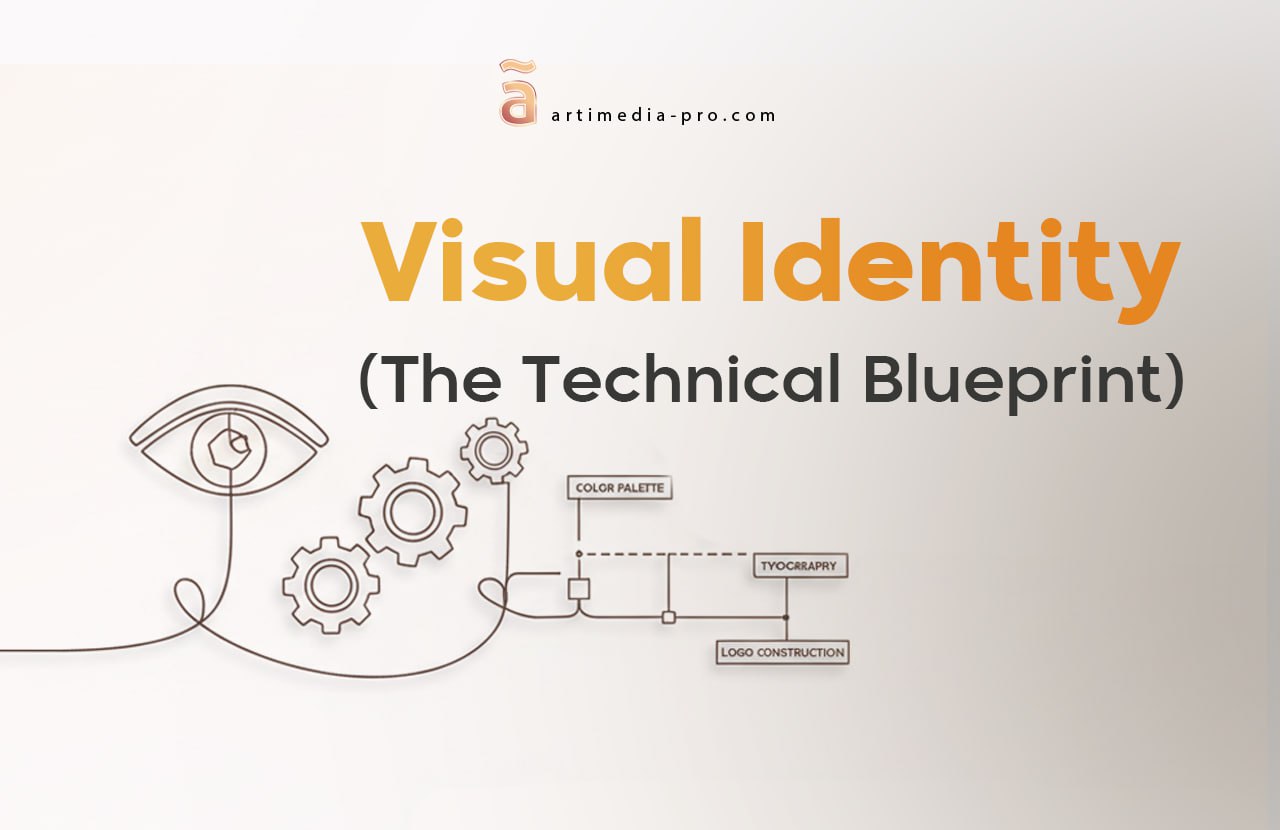 The visual identity section of your brand guide is the most used reference for the design and development of your brand and contains well-defined and actionable guidelines on how your brand should look across all visual touchpoints to ensure consistent brand image, brand recognition, and an overall professional image.
Logo Guidelines
Your logo is the most recognizable element of your brand, so it’s essential to define how and where it should be used:
- Primary, Secondary, and Submarks: Your visual identity includes your primary logo (logo), your secondary logo alternatives (alternative logos), and your smaller, simplified logos (submarks.) Each logo has defined use cases such as using the primary logo for the complete branding application, while using the submark for social media icons or small formats.
- Safe Zone- Clear Space Around the Logo: Define the minimum clear space around the logo to allow your logo to stand out and be easily legible. This will ensure that the logo is clearly visible and legible.
- Minimum Sizes: Define the smallest allowable size for the logo across print and digital platforms. This guarantees readability from a business card to a large billboard.
- The “Don’ts”: Include visual examples of improper usage, such as stretching, rotating, changing colors, or adding effects. Clear guidance prevents inconsistent or unprofessional representation of your brand.
The Color Palette
Colors are a powerful tool to communicate your brand personality. Your guide should clearly define both primary and secondary colors:
- Primary & Secondary Colors:
Specify the dominant shades that define your brand and the accent colors used for highlights, calls-to-action, or secondary elements. - Technical Specifications:
Provide exact color codes: HEX and RGB for digital use, and CMYK and Pantone for print. This ensures consistency across screens and printed materials. - Digital-First Considerations:
Include variations for Dark Mode, high-contrast accessibility, and other digital-specific applications. Following WCAG 2.2 standards ensures your brand remains accessible to all users.
Typography & Font Hierarchy
Fonts communicate tone, personality, and readability. Defining typography is essential for a seamless user experience:
- Primary & Secondary Typefaces:
Identify the main fonts that represent your brand’s personality and any secondary fonts for supporting elements. This ensures consistency across headings, body text, and other content. - Type Hierarchy:
Set rules for headers ($H1, H2, H3$), subheadings, and body text, including size, weight, and spacing. A clear hierarchy guides readers’ attention and improves readability, making all communications visually cohesive.
Verbal Identity (Tone & Voice)
The verbal identity defines how your brand speaks, communicates, and connects with its audience. While visual identity captures attention, verbal identity builds personality, trust, and emotional engagement.
Brand Personality
Your brand’s tone reflects its character and sets expectations for every interaction. Ask yourself:
- Are you Professional and Authoritative, conveying expertise and reliability?
- Or are you Witty and Energetic, inspiring creativity and friendliness?
Clearly defining personality helps your team maintain a consistent voice across all channels—social media, email, website content, and customer support—ensuring the audience always knows what to expect from your brand.
The Vocabulary
Words carry power. A well-defined vocabulary ensures that every message, post, or communication piece feels aligned with your brand identity. This includes:
- Words We Love: Key terms, phrases, and expressions that reflect your brand’s values, tone, and messaging style.
- Words We Avoid: Language that contradicts your brand’s personality, may confuse your audience, or weaken your messaging.
Having this list prevents inconsistent phrasing and strengthens brand recognition through tone and word choice.
AI Prompting Guidelines (New for 2026)
As AI tools like ChatGPT become integral to content creation, providing clear prompting guidelines is essential. This includes instructions on:
- How to instruct AI to generate content that aligns with your brand voice and tone.
- Examples of prompts that produce consistent, on-brand messaging.
- Tips for reviewing and editing AI-generated content to maintain authenticity and brand integrity.
By incorporating AI guidelines, teams can produce high-quality, consistent content quickly, without losing the unique personality of the brand.
Imagery & Digital Assets
Digital assets and imagery play a crucial role in forming the visual perception of your brand. Logos and colors create recognition, while imagery helps define the mood, style and emotional tone that makes your brand feel human and connect with a customer.
Photography Style
The type of photographs used to depict your brand invoke a certain emotion from potential customers. The style of photography should portray your personality and message/brand. You must decide how you want those captured emotions to reflect upon your company.
- Candid vs. Staged: Decide whether your imagery feels natural and spontaneous (candid) or carefully composed and controlled (staged).
- Warm vs. Cool: Choose the color temperature that supports your brand’s mood—warm tones for a friendly, approachable feel, cool tones for professionalism and calmness.
- Minimalist vs. Vibrant: Determine whether your photography should be clean and simple (minimalist) or bold and colorful (vibrant), depending on the brand’s personality and target audience.
Clear guidelines here help photographers, designers, and marketers maintain a consistent look and feel across campaigns and platforms
Iconography & Illustrations
Icons and illustrations are key visual tools that communicate complex ideas quickly and effectively. Define:
- Style: Line-art, flat design, or 3D elements.
- Usage: When and where each style should be applied, such as in digital interfaces, marketing materials, or presentations.
- Consistency: Ensuring that all icons and illustrations feel part of a cohesive visual system rather than disconnected graphics.
Social Media Templates
Social platforms require frequent content, and standardized templates save time while keeping your brand consistent:
- Instagram Stories: Predefined layouts for promotional posts, announcements, or storytelling.
- LinkedIn Banners: Branded visuals that reflect professionalism and reinforce brand recognition.
- YouTube Thumbnails: Eye-catching designs that maintain visual consistency with the brand’s style.
Templates ensure that every post or asset is instantly recognizable, strengthens brand identity, and speeds up content production without sacrificing quality
A Living Document for a Growing Brand
A brand style guide is not a rigid rulebook—it’s a dynamic platform that evolves as your business grows. It ensures consistency while allowing creativity, helping your brand stay relevant and recognizable across all channels.
Artimedia-Pro’s Advice
Think of your guide as a living framework: it provides structure without limiting innovation, and can be updated regularly to reflect your brand’s evolving vision.
Is your brand identity fragmented? At Artimedia-Pro, we create comprehensive brand style guides that unify your brand and make it stand out in any market. Contact us today to build your 2026 Brand Bible.