



The Evolution of SEO
Why do some websites dominate search results in 2026 while others struggle despite targeting the right keywords?
The answer lies in a major shift in how search engines work. Google no longer rewards isolated blog posts or keyword-focused pages.
Instead, it prioritizes Topic Authority—websites that demonstrate deep, structured expertise across an entire subject.
This is why scattered content no longer works. The solution is the Pillar and Cluster model: a strategic content framework that organizes your website around core topics supported by interlinked, in-depth content.
At Artimedia-Pro, we use this architecture to help brands outperform competitors with far larger budgets—by building authority, not just publishing more content.
The Pillar and Cluster Strategy is a proven content framework designed to help your website rank higher by demonstrating topical authority, relevance, and depth—exactly what search engines prioritize today.
What Is the Pillar and Cluster Strategy?
The Pillar and Cluster Strategy is a proven content framework designed to help your website rank higher by demonstrating topical authority, relevance, and depth—exactly what search engines prioritize today
The Pillar Page: Your Authority Hub
A Pillar Page is a long-form, high-level resource built around a broad, competitive topic such as Digital Marketing.
It acts as the central hub of your content, covering all major aspects of the subject in one structured page while guiding users to more detailed resources.
Instead of competing for a single keyword, the pillar targets an entire topic and its related search intents.
Content Clusters: Depth That Drives Rankings
Content Clusters are focused, in-depth articles that expand on individual subtopics like Email Marketing Trends, PPC Campaign Strategies, or SEO Audits.
Each cluster is optimized for specific long-tail keywords and user questions, helping you capture high-intent traffic while strengthening the authority of the main pillar.
Internal Linking: The SEO Power Connector
The real power of this strategy lies in strategic internal linking.
Every cluster article links back to the pillar page, and the pillar links out to all supporting clusters.
This interconnected structure sends a strong signal to Google that your website offers comprehensive, well-organized expertise—boosting rankings across the entire topic, not just individual pages.
When executed correctly, the Pillar and Cluster model transforms your content from isolated blog posts into a scalable SEO ecosystem built for sustainable, long-term growth.
The Benefits of Topic Clusters for Your Brand
 Implementing a Topic Cluster strategy is not just an SEO upgrade—it’s a brand-building advantage that compounds over time.
Stronger Authority and Credibility (E-E-A-T)
By covering a topic comprehensively instead of publishing isolated articles, you demonstrate deep expertise and real authority.
This signals to search engines that your brand is a trusted source across the entire subject—not just a single keyword—strengthening your E-E-A-T profile and long-term rankings.
A Seamless User Experience That Increases Engagement
Topic clusters organize your content into a clear, logical structure.
Visitors can easily navigate between related topics and find everything they need in one place, which naturally increases time on site, improves engagement, and reduces bounce rates—all critical SEO performance indicators.
Better Rankings Through Semantic Search and User Intent
Modern search engines evaluate search intent, not just exact-match keywords.
Topic clusters help your content rank for related queries, variations, and contextual searches, allowing your pages to capture high-value traffic without keyword stuffing.
Amplified SEO Power Through Internal Linking
One of the most overlooked benefits of topic clusters is internal link equity.
When a single cluster article earns a backlink, its authority flows through internal links to the pillar page—and then strengthens the entire cluster.
This means one link can boost rankings across multiple pages, not just one.
Together, these advantages transform your website into a scalable SEO authority hub—built to win visibility, trust, and sustainable organic growth.
Step-by-Step: Building Your First Pillar and Cluster
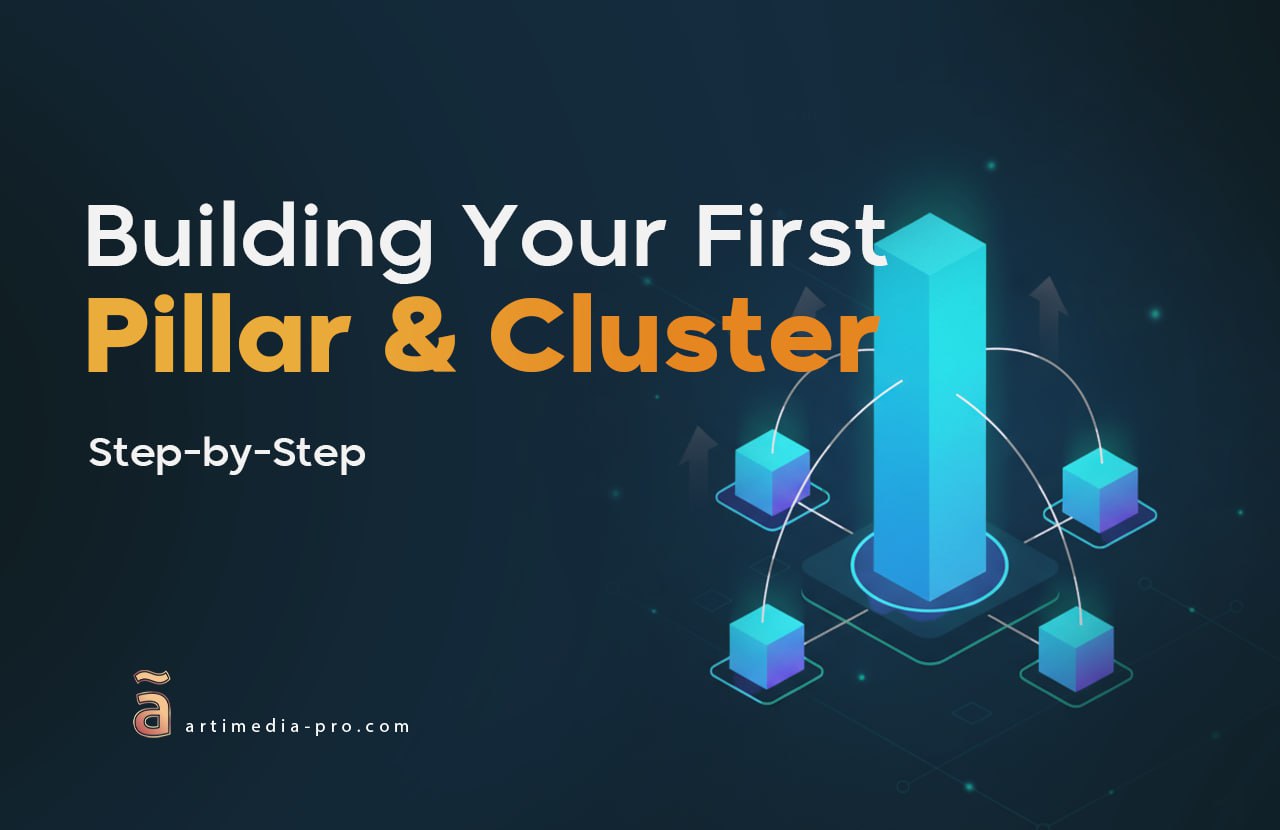 Creating a successful Pillar and Cluster structure isn’t about publishing more content—it’s about building strategic relevance.
Here’s how to do it the right way.
Phase 1: Selecting Your Core Topic
Your core topic is the foundation of your entire content ecosystem. It must be broad enough to support at least 10–20 related subtopics, yet focused enough to align with your business goals.
For example, at Artimedia-Pro, a strong pillar topic would be “Social Media Strategy.”
This single topic can naturally expand into content around planning, advertising, analytics, platforms, and optimization—making it ideal for long-term SEO authority.
Phase 2: Keyword Research for Cluster Content
Once your pillar topic is defined, the next step is identifying the specific questions your audience is actively searching for.
Focus on:
- “How-to” and “Why” queries
- Problem-based searches
- Long-tail keywords with clear intent
These keywords attract high-quality, ready-to-convert traffic while reinforcing the depth of your pillar topic in the eyes of search engines.
Phase 3: Connecting the Dots with Strategic Internal Linking
This is where the real SEO power happens.
Every cluster article must include a contextual link back to the pillar page, reinforcing its role as the central authority.
At the same time, the pillar page should link out to each cluster, creating a clean, logical content hierarchy.
This two-way linking structure signals to Google that your content is organized, authoritative, and comprehensive—exactly what modern search algorithms are designed to reward.
Common Mistakes to Avoid
Even a well-planned Pillar and Cluster strategy can lose its impact if not executed correctly. Avoid these critical mistakes to ensure your content works smarter, not harder.
1. Overlapping Topics and Keyword Cannibalization
Creating multiple cluster articles that compete for the same keyword splits your SEO power and confuses search engines.
Each cluster should target a unique user intent, so every page reinforces the pillar instead of undermining it.
2. Weak or Shallow Pillar Pages
Your pillar is the authority hub of your topic. If it’s too short or lacks depth, search engines won’t recognize it as a comprehensive resource.
A strong pillar provides substantial value, covers the topic broadly, and naturally guides users to detailed cluster content.
3. Broken or Outdated Internal Links
As you add new clusters, it’s easy to forget updating internal links. Broken or missing connections weaken your content hierarchy and dilute SEO signals.
Regularly auditing and linking new clusters keeps your site well-structured, authoritative, and SEO-ready.
By avoiding these mistakes, you ensure your Pillar and Cluster architecture delivers maximum authority, engagement, and long-term search visibility.
FAQ: Mastering Content Architecture
How long should a Pillar page be?
Ideally 2,000–4,000 words. It needs to be the “Ultimate Guide” for that topic.
Can I turn my old blog posts into a cluster?
Yes! At Artimedia-Pro, we specialize in “Content Audits” where we reorganize your existing content into a high-performing pillar/cluster structure.
How many cluster posts do I need?
Start with at least 5 to 10 for each pillar to show search engines that you have significant depth on the subject.
Build Your Digital Kingdom
In 2026, SEO isn’t just about ranking for a single keyword—it’s about owning the entire topic.
The true winners are the brands that structure their content strategically, deliver unmatched value, and position themselves as the go-to authority in their niche.
Is your content strategy scattered, or leaving potential traffic on the table?
Artimedia-Pro can transform your website into a powerful content engine that drives sustainable organic growth, boosts authority, and keeps you ahead of competitors—regardless of their budget.
Take control of your digital kingdom today.
Contact Artimedia-Pro for a Topic Authority Audit and start dominating your niche