


The hospitality industry has shifted from physical-first to digital-first decision-making.
Today’s travelers research, compare, and book services online before ever arriving.
Digital marketing for hospitality industry is now essential for visibility, trust, and revenue growth.
In this blog, you’ll learn key strategies, important channels, statistics, common challenges, FLUQs, and how to build a strong digital marketing system tailored for hospitality businesses in MENA and Syria.
What is Digital Marketing for Hospitality Industry?
Definition of digital marketing in hospitality (hotels, restaurants, resorts, tourism businesses).
Focus on online channels such as SEO, social media, paid ads, email marketing, and content marketing.
Goal: attract guests, increase bookings, and improve customer experience.
Importance of integrating multiple channels into a unified strategy.
Why Digital Marketing is Essential for Hospitality
Hospitality businesses rely heavily on online visibility and reputation.
According to Google, 70%+ of travelers start their journey online.
Source: https://www.thinkwithgoogle.com/consumer-insights/consumer-trends/travel-planning-online/
Online reviews also play a major role—87% of consumers read reviews before booking.
Source: https://www.brightlocal.com/research/local-consumer-review-survey/
Digital marketing helps increase direct bookings, reduce dependency on OTAs, and build brand authority.
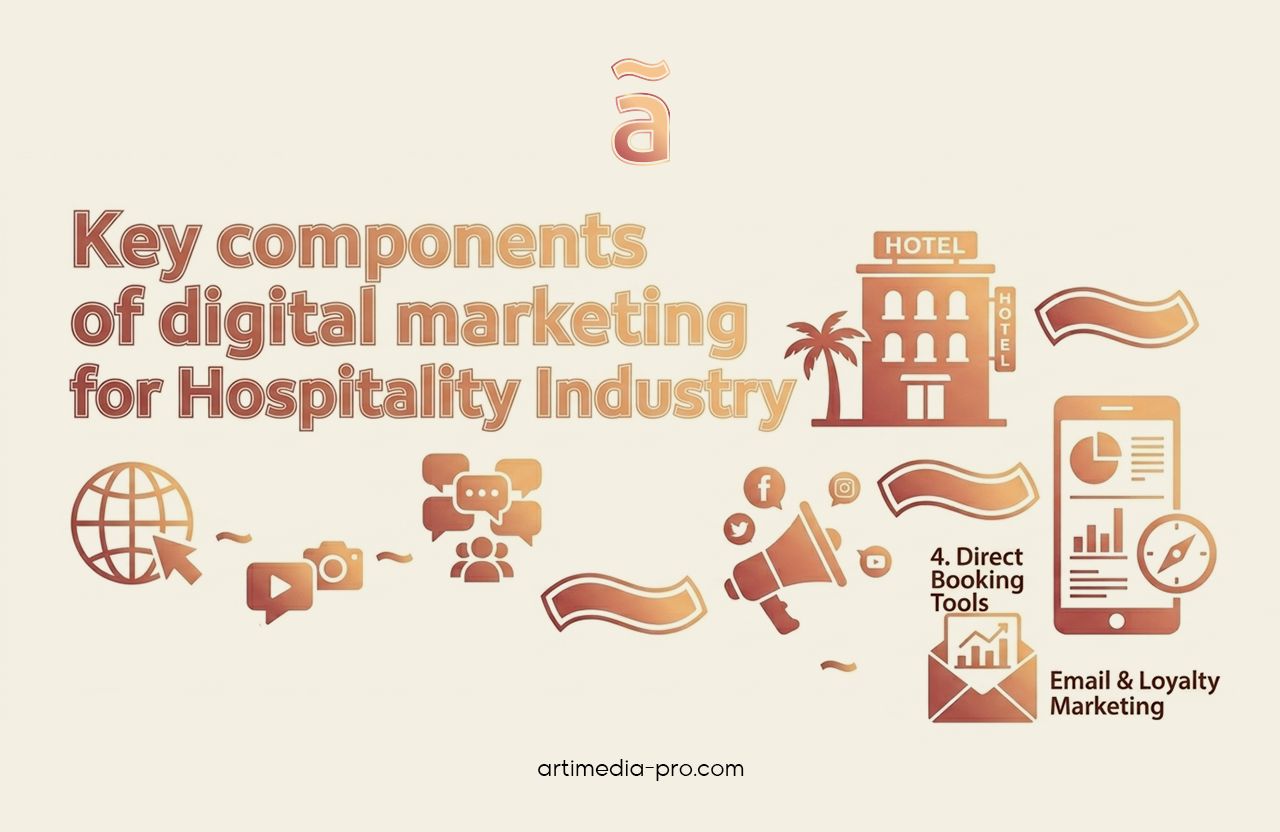
Key Components of Digital Marketing for Hospitality Industry
1 Website Optimization
Mobile-friendly, fast-loading, and visually appealing website.
Integrated booking engine and clear CTAs.
Importance of UX/UI in conversion optimization.
Mobile relevance: over 60% of travel bookings happen via mobile devices.
Source: https://www.statista.com/topics/2704/travel-and-tourism/
2 Search Engine Optimization (SEO)
Local SEO for location-based searches.
Keyword targeting for hospitality services.
Content creation (blogs, guides, landing pages).
Google Maps optimization and business listings.
3 Social Media Marketing
Platforms: Instagram, Facebook, TikTok.
Visual storytelling through photos and videos.
Influencer collaborations and user-generated content.
Engagement strategies (comments, polls, stories).
4 Paid Advertising (PPC)
Google Ads for search intent targeting.
Meta Ads for audience targeting and retargeting.
Seasonal campaigns for promotions and offers.
Budget optimization and ROI tracking.
5 Content Marketing
Travel blogs, destination guides, and tips.
Video tours and virtual experiences.
Storytelling to build emotional connection.
SEO-driven content for organic traffic growth.
6 Email Marketing
Booking confirmations and follow-ups.
Promotional campaigns and offers.
Loyalty programs and retention strategies.
Personalization based on user behavior.
7 Online Reviews & Reputation Management
Managing reviews on Google, TripAdvisor, and social platforms.
Responding to feedback (positive & negative).
Importance of reputation in influencing bookings.
Reviews directly impact trust and conversion rates.
Digital Marketing Strategies for Hospitality Businesses
Focus on local SEO to capture nearby searches.
Use high-quality visuals to attract and convert users.
Implement retargeting campaigns for abandoned visitors.
Leverage influencer marketing for credibility.
Encourage and showcase user-generated content.
Common Challenges in Hospitality Digital Marketing
High competition in saturated markets.
Seasonal demand fluctuations.
Managing multiple platforms and channels.
Maintaining consistent branding and messaging.
Measuring ROI accurately across channels.
Best Practices for Success
Invest in mobile-first website design.
Maintain consistent branding across all platforms.
Use analytics tools to track performance.
Focus on customer experience at every stage.
Continuously optimize campaigns based on data.
How to Build a Digital Marketing Strategy for Hospitality
Define clear business goals (bookings, awareness, retention).
Identify target audience segments.
Choose the right channels based on audience behavior.
Allocate budget across SEO, paid ads, and content.
Monitor, analyze, and optimize campaigns regularly.
FAQs
What is digital marketing for hospitality industry?
It is the use of online channels such as SEO, social media, email, and paid ads to promote hospitality services and increase bookings.
Why is digital marketing important for hotels and restaurants?
It increases visibility, builds trust, attracts customers, and helps generate direct bookings without relying solely on third-party platforms.
What are the most effective channels for hospitality marketing?
SEO, social media marketing, Google Ads, content marketing, and email marketing are among the most effective.
How can hospitality businesses increase direct bookings?
By optimizing their website, improving SEO, running targeted ads, and offering incentives for direct reservations.
Is digital marketing necessary for small hospitality businesses?
Yes, it helps small businesses compete with larger brands and reach targeted audiences efficiently.
Conclusion
Digital marketing is a critical component for success in the hospitality industry, especially in competitive markets like MENA and Syria.
A well-executed strategy helps businesses increase visibility, improve guest engagement, and maximize bookings.
Combining SEO, social media, paid ads, and reputation management creates a strong and sustainable growth system.
At artiMedia Pro, we help hospitality businesses build customized digital marketing strategies, improve online visibility, and increase direct bookings through data-driven approaches. Our expertise covers SEO, paid advertising, content marketing, and performance tracking tailored specifically for the hospitality sector.
Contact artiMedia Pro today to transform your hospitality business into a high-performing digital brand and attract more guests consistently.