On this page
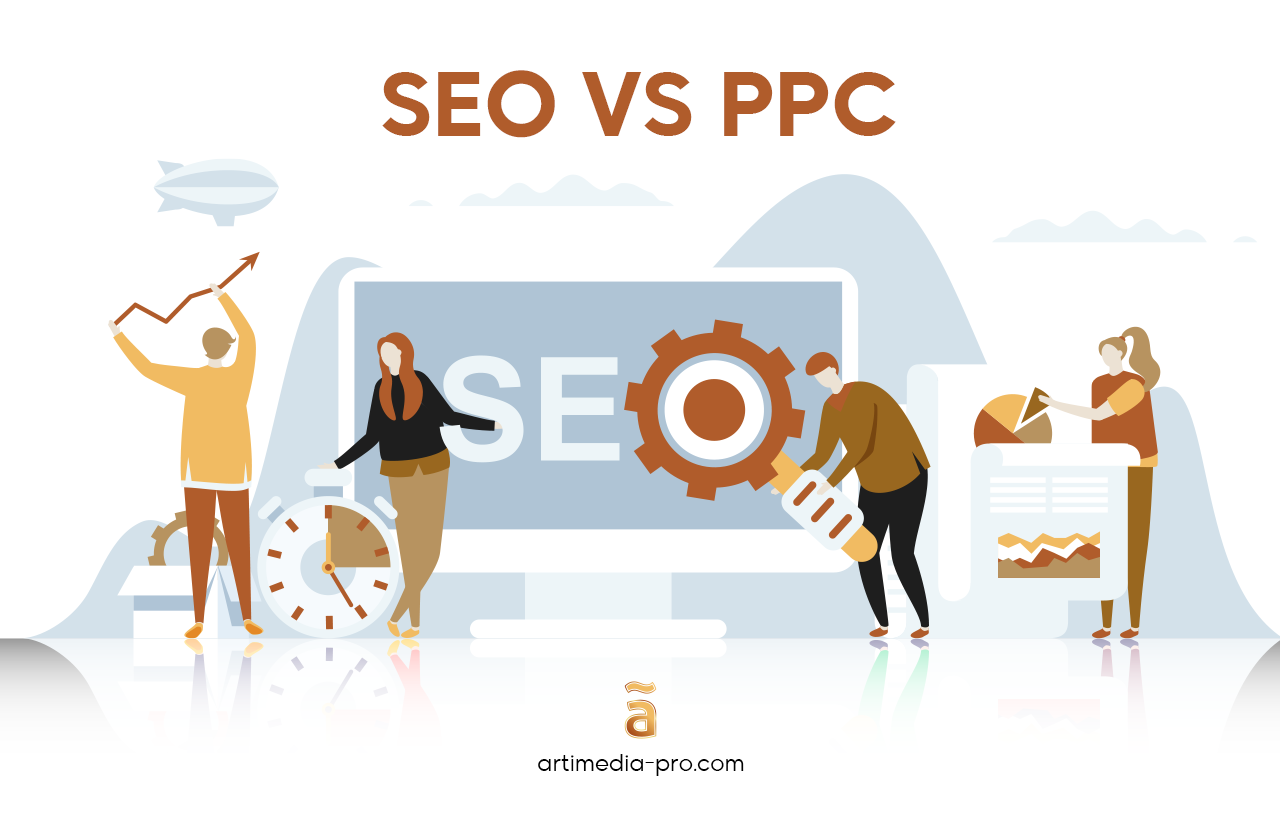
SEO earns free, compounding traffic from Google’s organic results but takes months to build; PPC buys instant visibility at the top of the page but stops the day you stop paying. SEM is the umbrella many marketers use for paid search, so “SEO vs SEM” and “SEO vs PPC” are usually the same decision. Most businesses should start with whichever matches their timeline and budget, then run both once they can.
Key Takeaways
- PPC delivers traffic the day a campaign goes live; SEO usually needs several months before rankings move, then keeps paying off without a per-click cost.
- Across 16,446 US search campaigns, the average Google Ads cost per click was $5.26 and the average cost per lead $70.11 (WordStream, 2025).
- The first organic result earns an average 27.6% of clicks, and the top three take 54.4% (Backlinko), so ranking position matters more than simply ranking.
- Paying for Google Ads does not improve your organic rankings. Google states this directly.
- Run both when you can: use paid search data to find which keywords convert, then invest SEO effort in ranking for them.
SEO vs PPC vs SEM: What’s the Difference?
The three terms overlap, which is why so many comparisons contradict each other.
- SEO (search engine optimisation) is the work of earning unpaid positions in search results: technical fixes, useful content, and links and mentions from other sites.
- PPC (pay-per-click) is a pricing model. You pay each time someone clicks your ad. It applies to search ads, but also to social, display and shopping ads.
- SEM (search engine marketing) originally meant all marketing on search engines, organic and paid. Today most marketers and tools use it to mean paid search, such as Google Ads and Microsoft Ads.
In practice, when someone asks “SEO or SEM?”, they are asking whether to earn search traffic or buy it. That is the same question as SEO vs PPC on search engines, and the rest of this guide answers it.
What Is SEO?
SEO makes your pages the best available answer for a search, so Google chooses to show them without payment. It has three working parts:
- Technical SEO: a site Google can crawl, render and index quickly, with clean URLs, fast mobile pages and correct structured data.
- On-page SEO: content that matches what the searcher wants, with clear headings, accurate titles and internal links between related pages.
- Off-page SEO: signals from outside your site, such as links from relevant publications, reviews and consistent business listings.
Our guide to SEO strategies covers each part in depth. If you serve customers in one city or region, start with local SEO, because map results often appear above the regular organic listings.
What Is PPC (Paid Search)?
With paid search, you bid on keywords and Google shows your ad when someone searches them. Position is decided by an auction that weighs your bid, the expected click-through rate, the relevance of the ad and the quality of the landing page. A highly relevant ad can outrank a competitor who bids more.
You control the budget, the locations, the hours and the audience down to the day. The trade-off is that visibility is rented: when the budget runs out, the ads disappear.
SEO vs PPC: Side-by-Side Comparison
| Factor | SEO | PPC |
|---|---|---|
| Cost per click | None; you pay for content, technical work and time | Every click is paid; $5.26 average on Google Ads in the US (WordStream, 2025) |
| Speed to results | Usually several months | Same day the campaign is approved |
| When you stop spending | Rankings decline gradually | Traffic stops immediately |
| Control | Low; Google decides rankings | High; you set keywords, budget, location and schedule |
| Testing speed | Slow; changes take weeks to measure | Fast; messages and pages can be compared in days |
| Best for | Long-term demand, research-stage searches, trust | Launches, offers, high-intent searches, seasonal peaks |
What the Data Says
Four findings are worth knowing before you set a budget.
Organic position decides most clicks. Backlinko’s analysis of about 4 million Google results found that the first organic result earns an average click-through rate of 27.6%, the top three results take 54.4% of all clicks, and the first result gets roughly ten times the clicks of the tenth (Backlinko, Google CTR Stats, updated April 2025). Ranking on page one is not enough; the gains come from the top three.
Paid search has a clear benchmark cost. WordStream’s review of 16,446 US search campaigns running April 2024 to March 2025 put the median Google Ads click-through rate at 6.66%, cost per click at $5.26, conversion rate at 7.52% and cost per lead at $70.11. Legal services averaged $8.58 per click (WordStream, 2025 Google Ads Benchmarks). Costs in Syria and many Gulf markets are often lower, but competitive sectors such as real estate, legal and healthcare can come close to these figures.
AI Overviews are taking clicks from informational searches. Ahrefs compared 300,000 keywords and found that when an AI Overview appears, the top-ranking page receives about 58% fewer clicks on average than before AI Overviews existed (Ahrefs, February 2026, December 2025 data). SEO for “what is” queries now needs to aim at being cited inside the AI answer, not just ranking under it.
Ads do not buy rankings. Google’s own help centre is direct: “Running online ads has no impact on where your website appears in organic search results” (Google Ads Help). Treat the two as separate investments.
How Much Do SEO and PPC Cost?
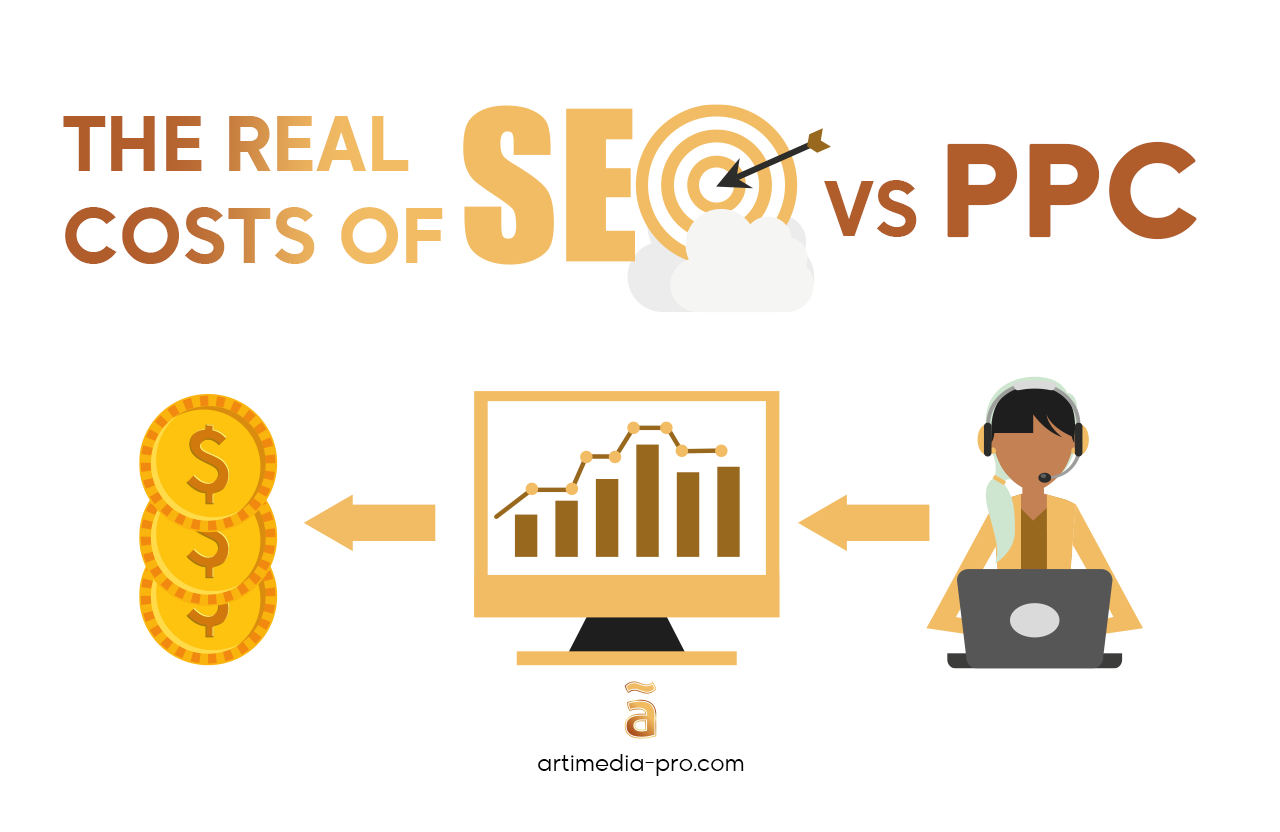
The two are priced in different ways, so compare cost per customer rather than monthly invoices.
- PPC cost = clicks × cost per click, plus management and landing pages. Spend scales directly with traffic: double the clicks, roughly double the bill.
- SEO cost = content, technical work and link building, whether in-house or with an agency. The cost is mostly fixed while traffic grows, so the cost per visitor falls over time.
A practical way to compare: take your PPC cost per lead, then estimate how many leads the same keywords would bring if you ranked organically in the top three. The gap is the long-term value of the SEO work, and the months it takes to get there are the cost of waiting.
When to Choose SEO, PPC or Both
Choose PPC first when:
- You are launching a new business, product or offer and need customers this month.
- You sell something seasonal, such as Ramadan offers or back-to-school services.
- You want to test which keywords and messages convert before committing to content.
- Your site is new and has no organic authority yet.
Choose SEO first when:
- Your budget is limited and you can wait several months for results.
- Your buyers research before buying and search informational questions.
- Your cost per click is high enough that paid search is not profitable.
- You want an asset that keeps working when spending pauses.
Run both when you can afford to. The two strengthen each other in three ways:
- Shared data. Paid search shows within weeks which keywords convert. Use that list to decide which pages to build and rank, instead of guessing.
- More space on the page. An ad and an organic result for the same search give buyers two chances to choose you and push competitors lower.
- A safety net. If a Google update drops your rankings, paid search keeps leads coming while you recover. If ad costs spike, organic traffic carries the load.
SEO vs PPC by Business Type
- Local services (clinics, maintenance, restaurants): start with your Google Business Profile and local SEO; add local search ads for urgent searches such as “emergency plumber”.
- E-commerce: shopping ads for best-selling products, SEO for category pages and buying guides.
- B2B and professional services: SEO and content for long research cycles; PPC on high-intent terms such as “[service] company in Dubai”.
- New brands: PPC and paid social for early traction, with SEO started in parallel so organic traffic replaces paid spend over time. See our comparison of organic vs paid social media for the social side of the same decision.
SEO and PPC in Syria and the Gulf
Two regional factors change the usual advice.
Arabic search is less competitive. Many businesses in the region publish only in English, or publish thin Arabic pages. Well-built Arabic pages can often rank faster than their English equivalents, which tilts the decision toward SEO for businesses that serve Arabic-speaking customers.
Example from our client work: Dozan, a home maintenance and renovation company in Damascus, relied on Arabic organic search rather than paid ads. By July 2025 it ranked first on Google for six of its target searches, including “أفضل شركة صيانة في سوريا” (best maintenance company in Syria), and earned 4,780 impressions and 190 organic clicks that month without paying for a single click. Its organic clicks have grown from zero to more than 8,110 since the work began.
Paid options vary by market. Gulf markets support the full range of Google, Meta, Snapchat and TikTok ad platforms, and Snapchat and TikTok are strong for younger audiences in Saudi Arabia and the UAE. In markets where paying for ads is harder, SEO and influencer partnerships carry more of the load, while social media ads fill the paid role where available.
Frequently Asked Questions
Is SEM the same as PPC?
Not exactly. PPC is a pricing model used on many platforms, including social media. SEM today usually means paid search ads on Google or Bing, which are almost always priced per click. So paid search is both SEM and PPC, but PPC on Instagram is not SEM.
Is SEO better than PPC?
Neither is better in every case. SEO usually costs less per visitor over the long run, while PPC is faster and easier to control. The right choice depends on how quickly you need results and how much each click costs in your industry.
How long does SEO take compared with PPC?
PPC can send traffic on the day the campaign is approved. SEO usually takes several months to show steady ranking gains, longer for competitive terms or new sites, and less for niche or Arabic searches with weak competition.
Does running Google Ads improve my SEO?
No. Google states that ads have no effect on organic rankings. Ads can help indirectly by showing which keywords convert, which helps you choose what to optimise.
Should a small business with a small budget start with SEO or PPC?
If you need leads this month, start with a small, tightly targeted PPC campaign on high-intent keywords. If you can wait, put the budget into local SEO and a Google Business Profile, which keep working after you stop spending.
Make the Decision With Your Own Numbers
Look up the cost per click for your main keywords in Google Keyword Planner, estimate the leads you need each month, and decide how long you can wait. If the answer is “not long”, start with paid search and use its data to plan SEO. If you want an outside view of where your site stands today, request a free SEO audit, or see our SEO and Google Ads services.
About the author: Akel Alkubeh is an SEO, GEO and AEO strategist at ãrtiMedia Pro. He runs search audits, organic growth programmes and paid search campaigns for businesses in Syria, the Gulf and international markets.
Was this article helpful?
Thanks for telling us.